
The Downtown Sanford Brewery That Never Actually Closed
read article
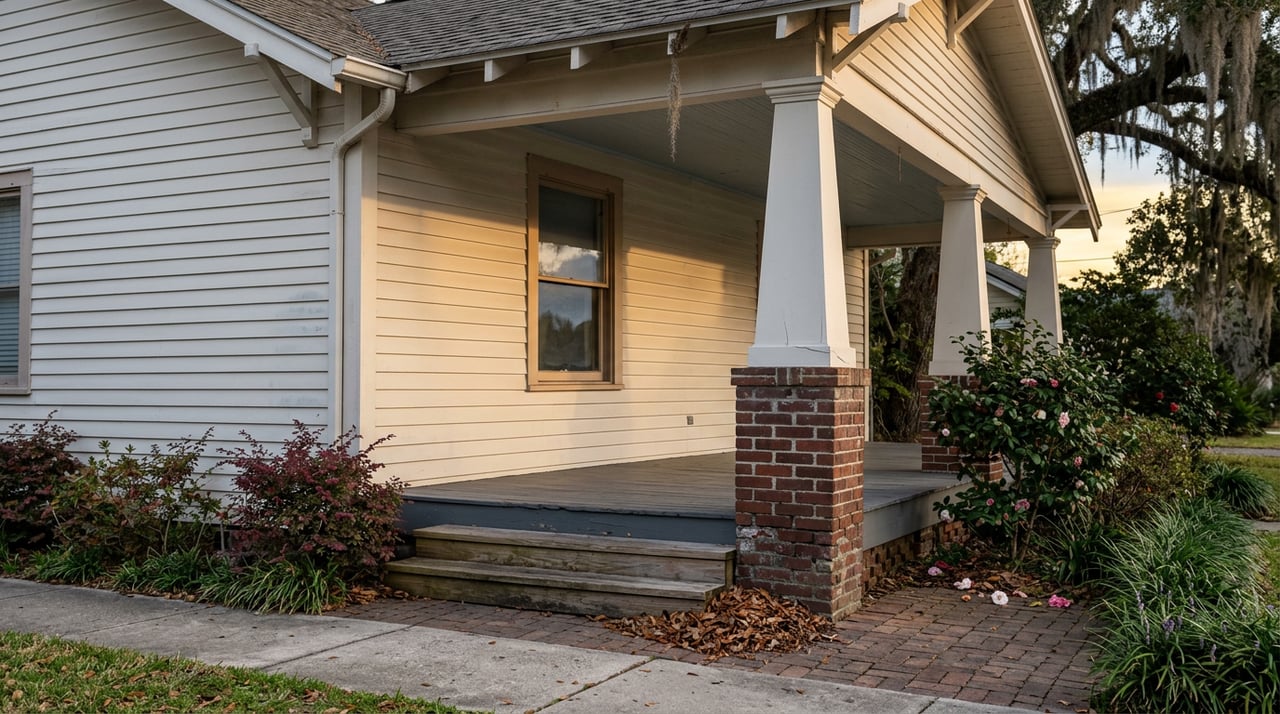
A 1900-built home a few blocks from downtown Sanford went on the market this year with a line in the listing that should stop any serious buyer mid-scroll: it sits in the heart of historic Sanford, the listing said, but "without the restrictions of the Historic District." The seller was treating a boundary line as a selling point in reverse. Being near the history was good. Being legally inside it was framed as a liability to escape.
That single line captures something most buyers and sellers in Sanford get wrong. They talk about "the historic district" as if it's one thing, with one set of rules, sitting under one map. It isn't. Sanford regulates four separate historic districts, and the rules governing what you can and can't do to your own house change depending on which of the four lines you happen to be standing inside.
The City of Sanford's Historic Preservation Board oversees four local districts: the Downtown Commercial Historic District, the Sanford Residential Historic District, the Sanford Avenue Historic District, and the Georgetown Residential Historic District. All four fall under Schedule S of the city's Land Development Regulations, Three of the four (Downtown Commercial, Sanford Residential, and Georgetown) are also listed on the National Register of Historic Places, according to the city's own historic preservation page.
Here's where it stops being uniform. In the Downtown Commercial, Sanford Residential, and Sanford Avenue districts, any exterior work, including basic repairs, needs a Certificate of Appropriateness (COA) from the Historic Preservation Board before it starts. In Georgetown, the COA requirement kicks in only for demolition and new construction. A homeowner in Georgetown can reroof, repaint, or replace siding without design review. A homeowner in Sanford Residential doing the identical project has to bring it to the board first.
| District | What Triggers a COA |
|---|---|
| Downtown Commercial | Any exterior work, including repairs |
| Sanford Residential | Any exterior work, including repairs |
| Sanford Avenue | Any exterior work, including repairs |
| Georgetown Residential | Demolition and new construction only |
That distinction rarely shows up in a listing description, and it should. Two buyers paying the same price for comparable square footage on different sides of a district line are buying two different levels of control over their own front elevation.
One thing does hold steady across all four: interior work doesn't trigger historic review anywhere in the city. A gut renovation of a kitchen, a bathroom addition, even structural changes inside the walls only need standard building permits, not a hearing before the preservation board. The board's jurisdiction stops at what you can see from the street.
Sanford's citywide housing market has softened over the past year. Over the three months ending in May 2026, the median sale price across the city was $345,000, down 6.2 percent from the same period a year earlier, with homes selling in an average of 37 days.
Homes specifically inside the Residential Historic District have not moved with the rest of the city. Listings there carried a median asking price of $397,000 in June 2026, and vintage homes within that same district carried a median list price of $413,000 as of early June 2026, moving faster too, closer to 30 days on market against the citywide 37.
That's a $50,000 to $70,000 gap between the historic core and the city as a whole. Buyers paying it are often assuming they're buying into a uniform, protected architectural character that will hold its value because the whole block is locked in together. That assumption only holds in three of the four districts. In Georgetown, the same premium buys a lighter regulatory hand. It's not a worse deal. It's a different one, and it's worth knowing which one you're actually signing up for before you write the offer.
Sanford properties permit through the City of Sanford Building Division if the address falls inside city limits, or through Seminole County if it doesn't. That line matters more in Sanford than in most Central Florida cities, because the historic districts sit close to city limits where addresses can look identical on a map but fall on opposite sides of the jurisdictional boundary.
Certificate of Appropriateness applications are filed through the city's Citizenserve portal. If a seller or buyer files a permit with the county by mistake when the address is actually inside city limits, the clock on that permit resets. For a seller trying to close out an approved repair before listing, or a buyer with a renovation-contingent contract, that mistake can cost weeks.
Local contractors who work both sides of Sanford's market describe it as two different remodeling jobs wearing one zip code. Homes in the historic core, some dating to the early 1900s, get treated differently than the 1980s-to-2000s housing stock closer to Lake Mary and Heathrow. On the older end, foundation and structural surprises are common enough that contractors build a 15 to 20 percent contingency into bids and timelines for pre-war homes, because demolition can uncover a cracked cast-iron stack or a rotted subfloor that a newer home simply wouldn't have.
That contingency isn't a red flag specific to any one property. It's the nature of a hundred-year-old structure, and it belongs in the conversation before an inspection period, not after one. A seller who gets ahead of it with documentation of prior repairs, or a buyer who budgets for it going in, avoids the scramble that catches people off guard mid-contract.
The regulatory framework isn't the only sign that Sanford treats its historic housing stock seriously. The Sanford Historic Trust runs the Holiday Tour of Homes each year, now in its 36th edition, and presents Historic Preservation Awards every May during National Preservation Week to recognize homeowners who've done right by their properties. For sellers weighing whether a historic renovation is worth the cost before listing, that's a market where good restoration work gets noticed publicly, not just appraised privately.
Do I need city approval to repaint or reroof a house in Sanford's historic district? It depends on which district. In the Downtown Commercial, Sanford Residential, and Sanford Avenue districts, any exterior work, including repainting and reroofing, requires a Certificate of Appropriateness. In the Georgetown Residential Historic District, a COA is only required for demolition and new construction.
Does an interior remodel need historic board approval? No. Interior renovations, including kitchen and bathroom work, only need standard building permits in every one of Sanford's four historic districts. The Historic Preservation Board's authority applies to what's visible from the exterior.
Where do I submit a Certificate of Appropriateness application? Through the City of Sanford's Citizenserve portal, which handles both the application and the associated fees online.
What if my address is technically outside city limits? Permits route through Seminole County instead of the City of Sanford Building Division. Filing with the wrong office resets the review clock, so confirming jurisdiction before submitting anything is worth the extra step.
If you're weighing a purchase inside one of Sanford's historic boundaries, or thinking about what a renovation before listing is actually worth, The Mel Bernstein Team can walk you through which district your address falls in, what it actually restricts, and what the current data says about pricing it right. Let's Connect.